
Table of Contents
ToggleMinimalist living vs. maximalist living represents two distinct approaches to how people organize their homes, spend their money, and define personal fulfillment. One philosophy embraces “less is more,” while the other celebrates abundance and self-expression through possessions. Neither approach is inherently better, both offer unique advantages depending on individual values, circumstances, and goals. This guide breaks down what each lifestyle means, how they differ, and how to determine which path suits your needs.
Key Takeaways
- Minimalist living focuses on owning fewer possessions to reduce stress, lower expenses, and create clutter-free spaces that promote mental clarity.
- Maximalist living embraces abundance and self-expression, treating possessions as meaningful extensions of personality and identity.
- Neither minimalist living nor maximalist living is inherently better—the right choice depends on your values, circumstances, and emotional response to different environments.
- Minimalists prioritize experiences and functionality, while maximalists find energy and inspiration in visual richness and curated collections.
- A hybrid approach works for many people, blending minimalist habits in some areas (like wardrobes) with maximalist tendencies in others (like book collections).
- Start with small experiments—declutter one room or add meaningful items to a bare space—to discover which lifestyle feels right for you.
What Is Minimalist Living?
Minimalist living centers on intentionally reducing possessions to focus on what truly matters. People who embrace minimalist living typically own fewer items, prefer clean and uncluttered spaces, and prioritize experiences over material goods.
The core idea is simple: own only what adds value to your life. A minimalist wardrobe might contain 30 versatile pieces instead of 100 rarely worn items. A minimalist home features open spaces, neutral colors, and furniture that serves a clear purpose.
Minimalist living extends beyond physical possessions. It often includes simplifying schedules, reducing digital clutter, and cutting back on commitments that drain energy without providing fulfillment. Many minimalists report feeling less stressed and more focused after adopting this lifestyle.
Popular figures like Marie Kondo and Joshua Fields Millburn have brought minimalist living into mainstream conversation. Their message resonates with people who feel overwhelmed by consumer culture and constant accumulation.
What Is Maximalist Living?
Maximalist living takes the opposite approach. It embraces abundance, bold design choices, and personal expression through collected items. Maximalists surround themselves with objects that bring joy, tell stories, or reflect their personality.
A maximalist home might feature vibrant colors, layered textures, extensive art collections, and decorative objects from travels or family history. Every corner tells a story. Empty walls feel like missed opportunities rather than peaceful spaces.
Maximalist living celebrates the idea that more can indeed be more. It rejects the notion that owning things is inherently negative or that simplicity equals virtue. For maximalists, their possessions represent memories, passions, and identity.
This lifestyle often appeals to collectors, artists, and people who find comfort in being surrounded by meaningful objects. It’s not about hoarding or disorganization, well-executed maximalist spaces are curated and intentional, just with a different definition of “enough.”
Key Differences Between Minimalism and Maximalism
The minimalist living vs. maximalist living debate comes down to several fundamental differences:
Space and Design
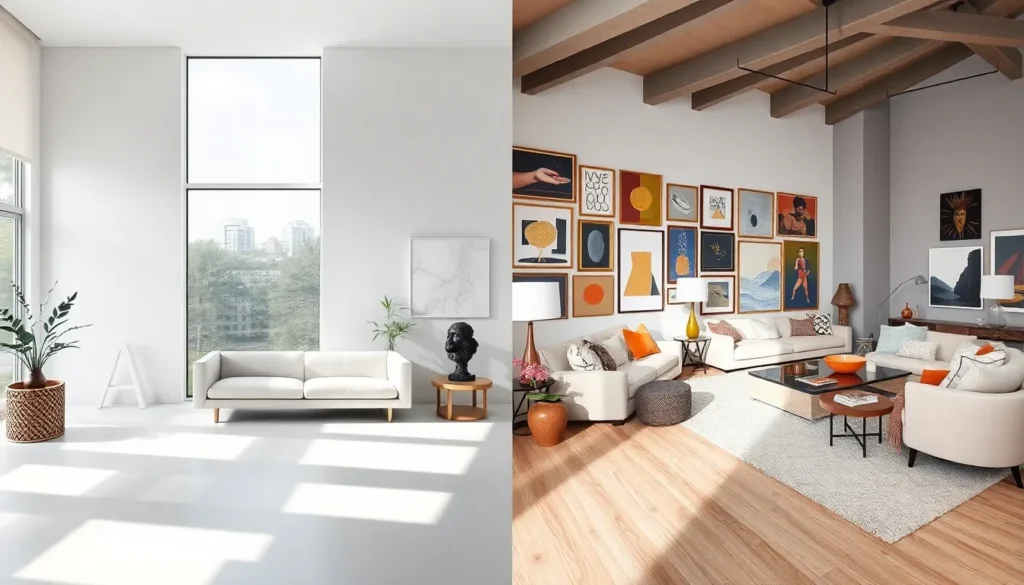
Minimalists favor open spaces, neutral palettes, and clean lines. Every item visible in a minimalist home serves a function. Maximalists prefer filled spaces, bold colors, and eclectic combinations. Visual interest comes from abundance rather than restraint.
Relationship with Possessions
Minimalist living treats possessions as tools. If something doesn’t serve a clear purpose or spark genuine joy, it goes. Maximalist living treats possessions as extensions of self. Objects carry emotional weight and meaning beyond utility.
Shopping and Consumption
Minimalists typically buy less but may invest in higher-quality items they’ll use for years. Maximalists may purchase more frequently, seeking items that add to their collections or enhance their spaces.
Mental Approach
Minimalist living often appeals to those seeking calm, focus, and freedom from decision fatigue. Maximalist living attracts those who find energy and inspiration in visual richness and variety.
Benefits and Drawbacks of Each Approach
Minimalist Living Benefits
- Lower expenses: Buying less means spending less
- Easier maintenance: Fewer items mean less cleaning and organizing
- Reduced stress: Clutter-free spaces can promote mental clarity
- Environmental impact: Consuming less reduces waste and resource use
- Mobility: Fewer possessions make moving and traveling easier
Minimalist Living Drawbacks
- Can feel restrictive for creative or sentimental people
- Risk of becoming obsessive about purging
- May cause regret if items are discarded too hastily
- Some find sparse environments cold or unwelcoming
Maximalist Living Benefits
- Self-expression: Spaces reflect personality and history
- Comfort: Being surrounded by loved items creates a sense of home
- Creativity: Visual variety can inspire ideas and energy
- Hospitality: Maximalist spaces often feel warm and inviting to guests
Maximalist Living Drawbacks
- Higher costs from ongoing purchases
- More time required for cleaning and organization
- Risk of clutter becoming overwhelming
- Moving becomes more challenging and expensive
Neither minimalist living nor maximalist living is inherently superior. The best choice depends on individual priorities and circumstances.
How to Choose the Right Lifestyle for You
Deciding between minimalist living and maximalist living requires honest self-assessment. Consider these questions:
How do you feel in different environments? Visit a minimalist showroom and a maximalist antique shop. Notice your emotional response to each space. Where do you feel more at ease?
What’s your relationship with possessions? Do objects burden you or bring you joy? People who feel weighed down by stuff often thrive with minimalist living. Those who treasure their collections may prefer maximalism.
What are your practical circumstances? Small apartments naturally suit minimalist living. Larger homes with storage can accommodate maximalist tendencies. Budget constraints may also influence your direction.
Can you blend both approaches? Many people land somewhere in the middle. A person might maintain a minimalist wardrobe but embrace maximalist bookshelves. Hybrid approaches work well for those who don’t fit neatly into either category.
Start small. Try decluttering one room following minimalist principles. Or add meaningful items to a bare space and see how it feels. Your ideal lifestyle will reveal itself through experimentation rather than philosophy alone.


