
Table of Contents
ToggleThe best minimalist living practices help people reclaim their time, space, and mental clarity. Minimalist living has grown from a niche lifestyle choice into a mainstream movement. Millions of people now choose fewer possessions and intentional habits over endless consumption.
This shift makes sense. Modern life often feels cluttered, physically and mentally. Overflowing closets, packed schedules, and constant digital noise drain energy. Minimalist living offers an antidote. It strips away the unnecessary and leaves room for what actually matters.
This guide breaks down what minimalist living means, its core benefits, and practical steps anyone can take today. Whether someone wants to declutter a single room or reshape their entire lifestyle, these practices provide a clear path forward.
Key Takeaways
- The best minimalist living practices focus on intentionality—keeping only items and commitments that add genuine value to your life.
- Minimalist living reduces stress by eliminating visual clutter, which studies show competes for attention and decreases mental performance.
- Start small by decluttering one drawer or room at a time using the four-box method (Keep, Donate, Trash, Relocate) to build momentum.
- Adopt the one-in-one-out rule to prevent clutter from returning after your initial decluttering efforts.
- Beyond physical spaces, minimalist living means saying no to time commitments that don’t align with your priorities.
- Creating a minimalist home environment involves choosing quality over quantity, clearing surfaces daily, and giving every item a designated spot.
What Minimalist Living Really Means
Minimalist living centers on owning and doing less so that people can focus on more meaningful experiences. It’s not about deprivation or living in an empty white room. The goal is intentionality, keeping only items and commitments that add genuine value.
Many people confuse minimalist living with extreme frugality. They picture bare apartments and one pair of shoes. But minimalism looks different for everyone. A parent with three kids will have more belongings than a single person in a studio apartment. That’s fine. The principle stays the same: remove excess to make room for priorities.
At its core, minimalist living asks one question repeatedly: “Does this serve me?” This applies to physical objects, relationships, digital subscriptions, and even thoughts. If something doesn’t contribute positively, it becomes a candidate for removal.
The concept gained mainstream attention through books like Marie Kondo’s “The Life-Changing Magic of Tidying Up” and documentaries featuring The Minimalists. These resources helped millions realize that owning less stuff could mean living more fully.
Minimalist living also connects to broader movements like sustainability and financial independence. Buying fewer things reduces waste and saves money. Those savings can fund experiences, early retirement, or charitable giving. The lifestyle ripples outward in unexpected ways.
Top Benefits of Embracing Minimalism
People who adopt minimalist living report several consistent benefits. These advantages extend far beyond tidy shelves.
Reduced Stress and Mental Clarity
Clutter creates cognitive load. The brain processes visual information constantly, and excess stuff demands attention even when people aren’t actively looking at it. Studies from Princeton University found that physical clutter competes for attention and decreases performance. Minimalist living removes these distractions.
More Time and Energy
Fewer possessions mean less time spent cleaning, organizing, searching, and maintaining. Someone with a capsule wardrobe of 30 items spends far less time choosing outfits than someone with 300 pieces. That time adds up. Minimalist living converts wasted hours into available ones.
Financial Freedom
Consumerism drains bank accounts. The average American household carries significant credit card debt, often from purchases that provide temporary satisfaction. Minimalist living breaks this cycle. People buy only what they need and genuinely value. Savings accumulate. Financial stress decreases.
Environmental Impact
Minimalist living benefits the planet. Less consumption means less manufacturing, shipping, and waste. A 2019 study estimated that household consumption drives 60% of global greenhouse gas emissions. Buying fewer things makes a measurable difference.
Improved Relationships
When people stop focusing on acquiring stuff, they often redirect attention toward relationships. Experiences shared with others, travel, meals, conversations, create stronger bonds than material gifts. Minimalist living prioritizes these connections.
How to Start Your Minimalist Journey
Starting minimalist living doesn’t require dramatic overnight changes. Small, consistent actions produce lasting results.
Begin With One Area
Tackling an entire home at once overwhelms most people. A better approach: start with a single drawer, closet, or room. Complete one space before moving to the next. This builds momentum and proves the concept works.
Use the Four-Box Method
Grab four boxes or bags labeled: Keep, Donate, Trash, and Relocate. Go through items one by one and sort them into these categories. No “maybe” pile allowed, that just delays decisions. The four-box method forces clarity.
Apply the One-Year Rule
For items that cause hesitation, ask: “Have I used this in the past year?” If not, it probably isn’t essential. Seasonal items get a pass, but that random kitchen gadget gathering dust? It can go.
Adopt One-In-One-Out
Once clutter is cleared, maintain progress with a simple rule: for every new item that enters the home, one existing item leaves. This prevents accumulation from creeping back. Minimalist living requires ongoing attention, not just a single purge.
Digitize When Possible
Paper clutter accumulates fast. Scan important documents and store them digitally. Cancel paper statements. Use e-books instead of physical copies when content matters more than format. Digital minimalism extends the philosophy to screens and files.
Start Saying No
Minimalist living extends beyond objects. People often overcommit their time. Practice declining invitations, requests, and obligations that don’t align with priorities. A packed calendar feels just as cluttered as a packed closet.
Creating a Minimalist Home Environment
A minimalist home environment supports calm and focus. Design choices matter as much as decluttering.
Choose Quality Over Quantity
Minimalist living favors fewer, better items. One well-made sofa beats three cheap ones that need replacing. Investing in quality furniture, appliances, and tools saves money over time and reduces waste.
Embrace Neutral Colors and Clean Lines
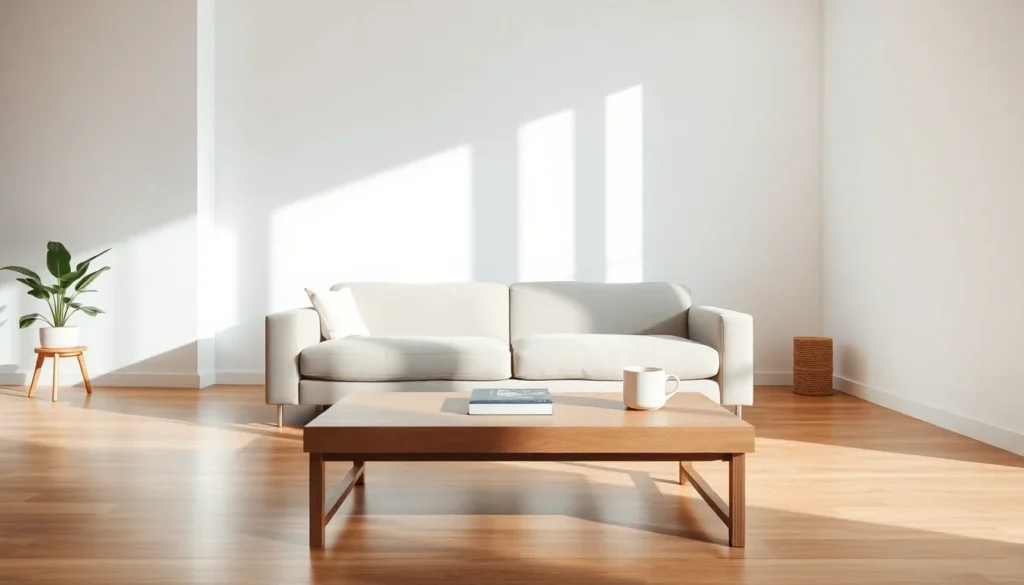
Visual simplicity reinforces minimalist living. Neutral color palettes, whites, grays, beiges, soft blues, create cohesion. Furniture with clean lines and simple shapes reduces visual noise. This doesn’t mean boring. Texture, plants, and strategic accent pieces add warmth without clutter.
Maximize Storage and Hide Chaos
Minimalist spaces look clean because storage hides necessities. Built-in cabinets, under-bed containers, and closed shelving keep belongings out of sight. Open shelving works only when items displayed are intentional and attractive.
Clear Surfaces Daily
Countertops, desks, and tables attract random items. Make clearing surfaces a daily habit. This single practice transforms how a space feels. Minimalist living becomes visible when flat surfaces stay empty.
Limit Decorative Items
Decoration should be intentional. Instead of covering walls with random art, choose a few meaningful pieces. Instead of scattering knickknacks everywhere, display one or two items that spark genuine joy. Less decoration creates more impact.
Create Designated Spots
Everything in a minimalist home needs a specific place. Keys go in the dish by the door. Mail lands in the inbox tray. Shoes stay in the closet. When items have homes, clutter can’t accumulate. This system makes minimalist living sustainable.


