
Table of Contents
ToggleMinimalist living tools help people reduce clutter and focus on what matters most. These items serve multiple purposes, last longer, and take up less space than their conventional alternatives. The right tools can transform a chaotic home into a calm, functional space.
This guide covers essential minimalist living tools for every area of life. From home organization to kitchen essentials, readers will discover practical items that support a simpler lifestyle. The goal isn’t to own nothing, it’s to own the right things.
Key Takeaways
- Minimalist living tools serve multiple purposes, last longer, and take up less space than conventional alternatives.
- Quality over quantity is essential—invest in durable items like cast iron skillets, chef’s knives, and Dutch ovens that replace multiple single-use gadgets.
- Digital tools like note-taking apps, cloud storage, and e-readers eliminate physical clutter while keeping information accessible.
- Home organization essentials such as matching storage bins, slim hangers, and drawer dividers create calm, functional spaces.
- Apply the one-in-one-out rule and a 30-day waiting period before purchases to prevent accumulation and ensure intentional buying.
- The goal of minimalist living isn’t owning nothing—it’s owning the right things that work well and bring lasting satisfaction.
What Makes a Tool Minimalist
A minimalist tool serves more than one purpose. It performs its job well without extra features that add bulk or confusion. Think of a quality chef’s knife versus a drawer full of single-use gadgets.
Durability matters too. Minimalist living tools should last for years, not months. Items made from quality materials like stainless steel, solid wood, or reinforced fabrics reduce the need for constant replacement.
Size and storage also play a role. The best minimalist tools take up minimal space when not in use. They stack, fold, or hang neatly. A collapsible colander beats a bulky plastic one every time.
Finally, aesthetic simplicity counts. Minimalist items feature clean lines and neutral colors. They look good left out on a counter or shelf, which eliminates the need for storage solutions to hide them.
Must-Have Tools for Home Organization
Home organization forms the backbone of minimalist living. A few key tools make the difference between clutter and calm.
Storage bins and baskets keep items contained without visual chaos. Opt for matching sets in neutral tones. Woven baskets work well for living areas, while clear bins suit closets and pantries.
A label maker sounds old-school, but it works. Labels ensure everything has a designated spot. Family members know where things belong, reducing the mental load of constant tidying.
Slim hangers reclaim closet space instantly. Velvet or wooden hangers take up less room than plastic ones and prevent clothes from slipping.
A quality vacuum with multiple attachments handles floors, upholstery, and tight spaces. One good vacuum eliminates the need for brooms, dustpans, and specialty cleaners.
Drawer dividers transform junk drawers into organized systems. They work in kitchens, bathrooms, and bedrooms. Adjustable versions adapt to different drawer sizes.
Digital Tools That Reduce Clutter
Minimalist living tools extend beyond physical objects. Digital tools eliminate paper, reduce device count, and streamline daily tasks.
Note-taking apps replace notebooks, sticky notes, and loose papers. Apps like Notion, Evernote, or Apple Notes sync across devices. Users access their thoughts anywhere without carrying physical materials.
Cloud storage services eliminate external hard drives and USB sticks. Google Drive, Dropbox, and iCloud store photos, documents, and files securely online.
E-readers replace entire bookshelves. A single Kindle or Kobo holds thousands of books in a device smaller than a paperback. Library apps like Libby provide free access to digital books.
Password managers reduce mental clutter. Tools like 1Password or Bitwarden store login credentials securely. Users remember one master password instead of dozens.
Scanning apps turn phones into document scanners. They digitize receipts, warranties, and important papers. The originals go in the recycling bin.
These digital minimalist living tools free up physical space and mental bandwidth.
Kitchen Essentials for Minimalist Living
Kitchens attract clutter faster than any other room. Minimalist living tools for the kitchen focus on versatility and quality.
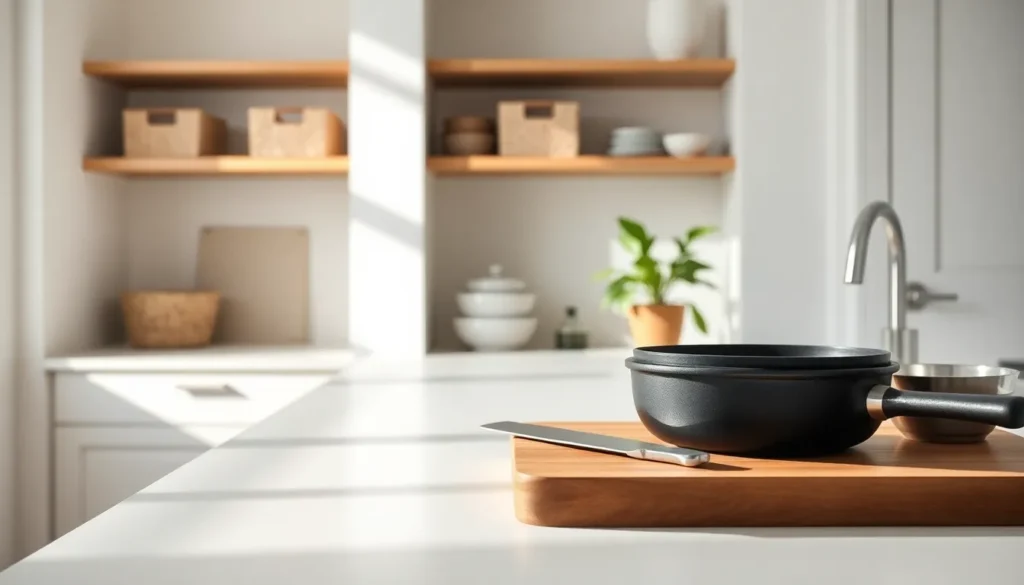
A cast iron skillet replaces multiple pans. It sears, bakes, fries, and roasts. With proper care, it lasts a lifetime.
One quality chef’s knife handles 90% of cutting tasks. A sharp 8-inch blade chops vegetables, slices meat, and minces herbs. Skip the knife block with twelve blades.
A Dutch oven works on the stovetop and in the oven. It braises, bakes bread, simmers soups, and even fries. One pot, endless possibilities.
Nesting mixing bowls stack inside each other. Stainless steel versions double as serving bowls. Three sizes cover most cooking needs.
A wooden cutting board serves food prep and presentation. It looks better than plastic and lasts longer with proper oiling.
Silicone spatulas with removable heads clean easily. Two or three cover stirring, scraping, and folding tasks.
Minimalist kitchen tools prioritize function over quantity. Fewer items mean less cleaning, less searching, and more cooking enjoyment.
How to Choose Quality Over Quantity
Selecting minimalist living tools requires a shift in thinking. Quality beats quantity every time, but spotting quality takes practice.
Research before buying. Read reviews from multiple sources. Look for patterns in complaints. A product with consistent praise likely delivers on its promises.
Check materials. Solid wood outlasts particleboard. Stainless steel beats cheap aluminum. Natural fibers hold up longer than synthetic blends. Better materials cost more upfront but save money over time.
Consider the warranty. Companies confident in their products offer generous warranties. A lifetime guarantee signals quality construction.
Buy secondhand when possible. Vintage tools often surpass modern equivalents. A used Le Creuset pot or Vitamix blender still performs beautifully for years.
Apply the one-in-one-out rule. Every new item requires removing an existing one. This practice prevents accumulation and forces thoughtful purchasing.
Wait before buying. A 30-day waiting period separates genuine needs from impulse purchases. Items that still seem necessary after a month probably are.
Minimalist living tools represent investments, not expenses. Spending more on fewer, better items creates a home filled with things that work well and bring satisfaction.


